

By: Haley Bryant | Updated March 2026
If you have ever shopped for condoms and noticed the word “spermicide” on the box, you have already crossed paths with Nonoxynol-9, better known as Non-9. For a long time, this ingredient was marketed as an extra layer of protection. The logic sounded solid. If condoms prevent pregnancy, adding something that kills sperm should make them even better.
That idea stuck around for years. Today, the conversation looks very different.
This guide breaks down what Nonoxynol-9 actually is, why it lost popularity, what current research says, and what you should be using instead when you buy condoms.
What Is Nonoxynol-9?
Nonoxynol-9 is a chemical surfactant. In simple terms, it works by disrupting cell membranes. That includes sperm cells, which is why it has been used as a spermicide in a variety of products.
- Spermicidal condoms
- Vaginal gels and foams
- Suppositories and contraceptive films
The goal is straightforward. Immobilize or destroy sperm before it can lead to pregnancy.
On paper, that sounds like a solid backup plan. In reality, it comes with trade-offs.
Why Spermicide Condoms Became So Popular
There was a time when major brands leaned heavily into spermicidal condoms. The messaging was simple. More protection equals better protection.
Brands like Trojan, Durex, Lifestyles, Kimono, and Glyde all produced Non-9 options at various points. Products like the Today Sponge also relied on spermicide as a core feature.
For consumers, it felt like an upgrade. A condom plus spermicide sounded safer than a condom alone.
That assumption is what modern research ended up challenging.
The Problem With Nonoxynol-9
Over time, studies began to show that Nonoxynol-9 is not as harmless as it was once believed to be, especially with repeated use.
The main issue is irritation. Non-9 does not just affect sperm cells. It can also irritate the delicate tissues of the vagina and rectum.
This irritation can lead to tiny abrasions, sometimes called microtears. These are not something you will necessarily feel, but they matter.
They make it easier for infections to enter the body.
What the Research Says
The World Health Organization has advised against using Nonoxynol-9 for STI prevention. The CDC also states that spermicides containing Non-9 do not protect against sexually transmitted infections and may actually increase risk when used frequently.
A widely cited study published in The Lancet (Van Damme et al., 2002) found that frequent use of Non-9 was associated with higher rates of HIV infection. Another study in the Journal of Infectious Diseases (Roddy et al., 1998) documented disruption to vaginal tissue after repeated exposure.
Dr. Jeanne Marrazzo, an infectious disease specialist, has noted that products like Nonoxynol-9 can compromise the body’s natural defenses by causing irritation. That is the opposite of what you want from something associated with protection.
Is Spermicide Bad for You?
This is where nuance matters.
Nonoxynol-9 is not considered dangerous when used occasionally by individuals who do not experience irritation. The issue shows up with repeated exposure or in people with sensitive skin.
Situations where Non-9 is more likely to cause problems include:
- Frequent use over a short period of time
- High friction during sex without enough lubrication
- Use during anal sex, where irritation risk is significantly higher
- Existing sensitivity or history of irritation
Common side effects can include burning, dryness, and irritation. Over time, this can increase vulnerability to infections.
Because of this, many health professionals now recommend avoiding spermicidal condoms for regular use.
Do Spermicidal Condoms Work Better?
Short answer. Not in a meaningful way.
Standard condoms without spermicide are already highly effective when used correctly. Adding Non-9 does not significantly improve pregnancy prevention.
What it does add is a higher likelihood of irritation for some users.
Organizations like Planned Parenthood emphasize that proper condom use alone is more than enough for preventing pregnancy and reducing STI transmission.
In other words, you do not need a chemical assist for a condom to do its job.
Why Most Brands Are Moving Away From Non-9
If you have noticed fewer spermicidal condoms on the market, that is not a coincidence.
Manufacturers have shifted in response to updated research, medical guidance, and consumer demand for more body-friendly products.
Modern condom design focuses on comfort, sensitivity, and safety without relying on harsh additives.
That includes thinner materials, better lubrication, and improved durability.
What You Should Use Instead
If your goal is to stay protected and avoid unnecessary irritation, the solution is pretty simple.
Standard Condoms Without Spermicide
This is your best option. Latex, polyisoprene, and polyurethane condoms without Nonoxynol-9 are safe, effective, and widely recommended.
High-Quality Lubricants
Instead of relying on spermicide, a good lubricant will improve comfort and reduce friction, which helps prevent irritation.
Water-based options are versatile and gentle. Silicone-based lubricants last longer and are great for extended sessions.
Consistency Matters More Than Additives
Using a condom correctly every time is far more important than any added ingredient.
- Use a new condom for every encounter
- Put it on before any contact
- Use enough lubrication
- Store them properly
That is what actually makes the difference.
Why Are Spermicidal Condoms Still Sold?
Even with all this information, some spermicidal condoms are still on the market.
There are a few reasons for that. Some consumers still prefer them, and older product lines can take time to phase out completely. There is also a smaller niche of users who tolerate Non-9 without issues.
That said, they are no longer the default recommendation.
Bottom Line
Nonoxynol-9 had its moment. It was introduced with good intentions and made sense based on what was known at the time.
Today, we know more.
It does not improve protection in a meaningful way, and it can increase irritation, especially with frequent use. In some cases, that irritation may increase the risk of infection.
If you want reliable protection, you do not need spermicide.
You need a high-quality condom and consistent use.
Skip the unnecessary additives. Stick with what works.
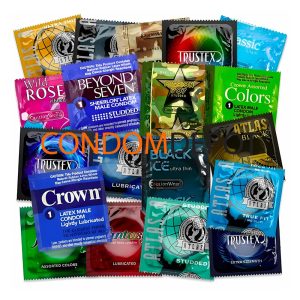

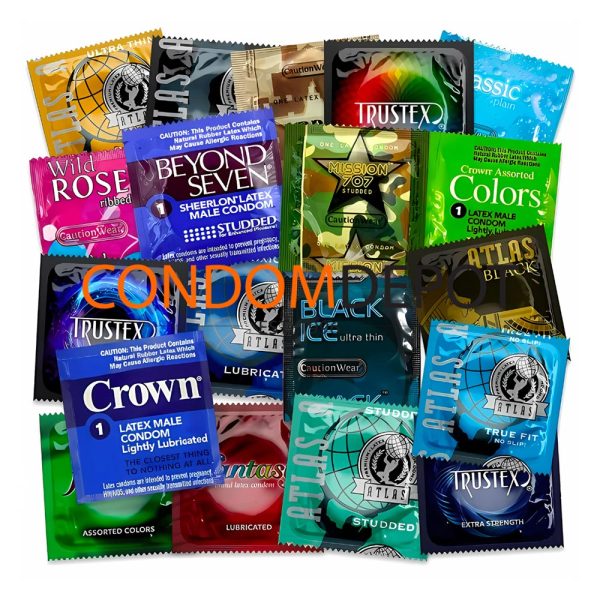
Condom Depot’s Ultimate Condom Sampler
Best Condom Variety Packs | Condom Depot Ultimate Condom Sampler
References
Van Damme, L. et al. (2002). Effectiveness of COL-1492, a nonoxynol-9 vaginal gel, on HIV-1 transmission. The Lancet.
Roddy, R. et al. (1998). A controlled trial of nonoxynol 9 film to reduce male-to-female transmission of sexually transmitted diseases. Journal of Infectious Diseases.
World Health Organization. Guidance on the use of Nonoxynol-9.
Centers for Disease Control and Prevention. Contraceptive guidance and STI prevention.
Planned Parenthood. Birth control and condom effectiveness resources.