

Herpes Simplex Virus most commonly affects the mouth and genital regions of the human body. This virus is caught by having skin-to-skin physical contact with someone who carries herpes.
Many people infected with herpes become asymptomatic over time, yet they are still highly contagious. Even though there may no longer be any visual indication that they are a carrier, the virus is still present and active in their cells, which slough off and can be passed to a partner.
Once this virus enters the body, there is no technical “cure,” but there are SO many ways to make this manageable with things like antivirals and other medication. There are topical prescription medications to control the outbreaks of herpes, which happen from time to time, but they do not eliminate the virus or keep it from being contagious to others. These outbreaks consist of fever blisters, cold sores and clusters of inflamed papules (a crusty elevation of skin) and vesicles (a liquid filled cavity under the skin).
The Center for Disease Control has been tracking the herpes virus since 1966. Since this time the number of initial doctor’s visits for new herpes patients has gone from to 20,000 a year in 1966 to 250,000 visits during 2011. As these statistics indicate, herpes is on the rise in America.
The CDC estimates that currently 1 in 6 adults under the age of 50 carries the herpes virus. If you suspect you have been exposed to herpes, or you are experiencing your first outbreak, get tested. The good news is, the CDC cites condoms and dental dams as an effective means of protection against herpes.
Open communication and safer sex education is essential to the fight against the spread of herpes. Anyone who has been diagnosed with herpes has a great responsibility to be as safe as possible during sexual activities, which includes kissing and oral, vaginal and anal sex. People who are not carriers of herpes also have a challenge in the sense that they need to be ever vigilant against catching it themselves.
While there are multiple variations of the herpes virus, only two are considered to be STDs. These two infectious strains are known as HSV 1 and HSV 2 (this is an abbreviation for herpes simplex virus). There is a lot of confusion about the difference between these two types of herpes, even by the people who carry the virus themselves. Here’s a breakdown of each type of herpes and a frequently asked question about this lifelong virus.
Herpes Simplex Virus 1 (HSV 1)
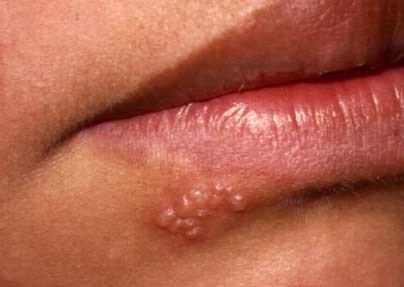
HSV 1 affects the mouth region, including the lips, gums, tongue, throat and the roof of the mouth. Typically, the symptoms appear at the original site of infection anywhere from 3-12 times annually and each painful fluid filled blister takes approximately 2 weeks to heal and disappear. This can lead to a lot of embarrassment for those who frequently have prominent evidence of an STD on their face.
Herpes Simplex Virus 2 (HSV 2)
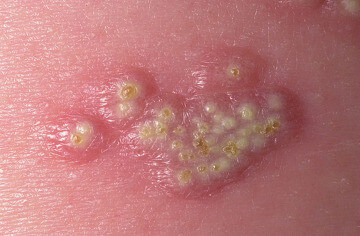
HSV 2 affects the genital region including the penis, scrotum, vagina and anus. HSV 2 is transmitted through contact with shedding skin cells, not bodily fluids. Using a female condom, like the FC2, is a safer way to have sex with a partner who has HSV 2, because it covers a larger area of the skin on the receiving partner than a traditional male condom like the LifeStyles Extra Strength does.
Can Herpes Be Passed From Mouth to Genitals or Vice Versa?
Yes. HSV-1 and HSV-2 are distinct viral strains, but either strain can infect either location. HSV-1, which typically causes oral herpes, can be transmitted to the genital area through oral sex — resulting in genital HSV-1. Similarly, HSV-2, which primarily affects the genitals, can infect the mouth through oral contact, resulting in oral HSV-2. The strain does not change — HSV-1 remains HSV-1 and HSV-2 remains HSV-2 regardless of where on the body the infection occurs.
This cross-site transmission is more common than many people realize. According to the CDC, an increasing proportion of genital herpes cases are now caused by HSV-1, largely due to oral-genital contact. This means that someone with a cold sore (oral HSV-1) can transmit the virus to a partner’s genitals during unprotected oral sex, even if no sore is visibly present.
Using a barrier method during oral sex — a flavored condom for fellatio or a dental dam for cunnilingus and analingus — significantly reduces but does not eliminate the risk of transmission. If you are unsure how to properly use a dental dam for safer oral sex, read more in our guide: How to Use a Dental Dam.